Perplexity vs Google: Why Perplexity Saves You Time
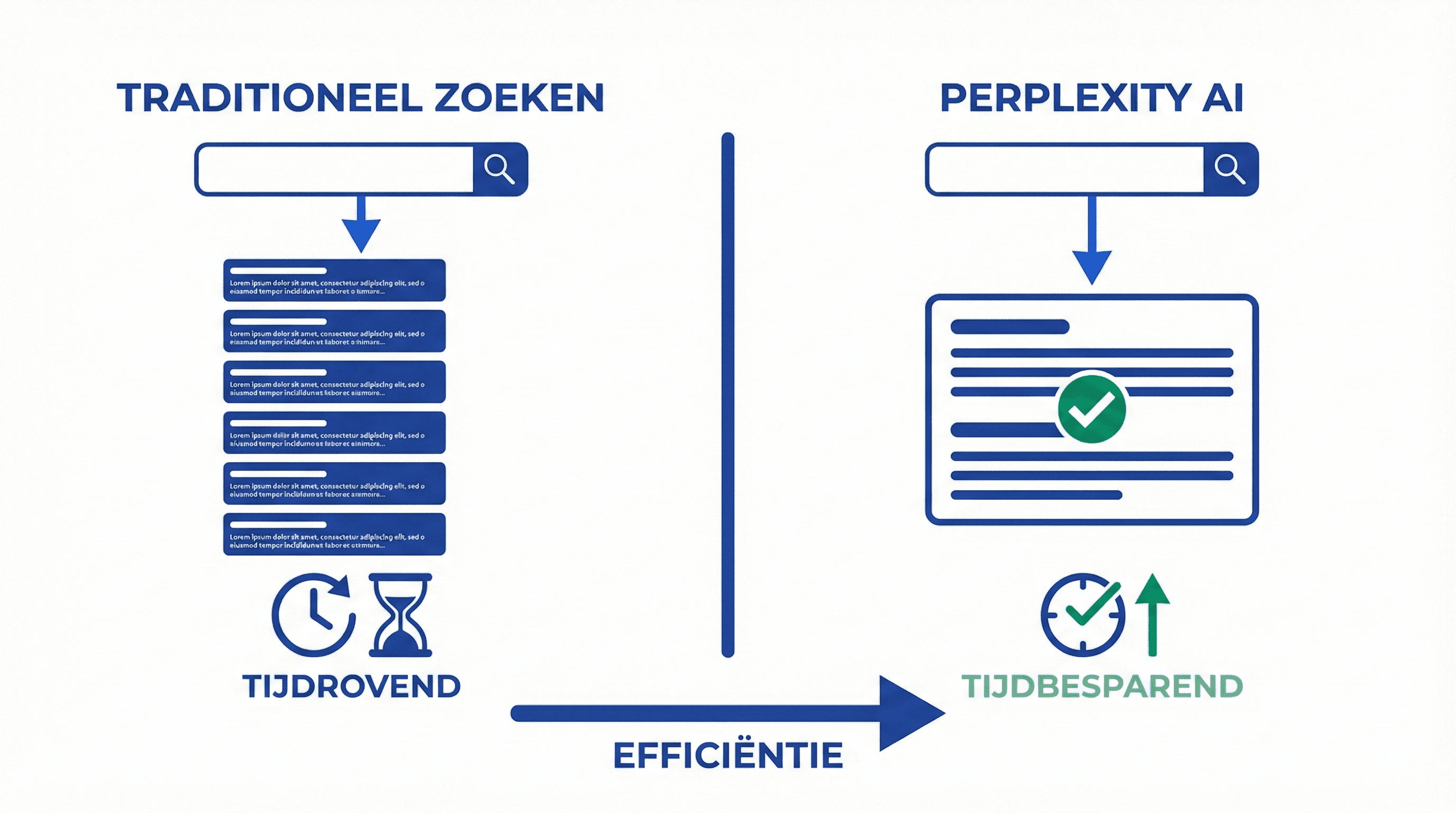
Comparison between Perplexity and Google Search. Learn when to use which and how Perplexity saves you time during research.
A practical comparison between Perplexity and Google. When to use which? With concrete use cases and examples of time savings.
# Perplexity vs Google: Why Perplexity Saves You Time
Google gives you 10 blue links full of ads. Perplexity gives you an answer. It reads those 10 websites for you and summarizes them, with citations. Here’s when to use which.
The Difference
Google Search:
- Provides links to websites
- You have to scroll through results yourself
- Many ads between the results
- You need to open multiple websites
Perplexity:
- Provides an answer directly
- Summarizes multiple sources
- Citations for each point
- No ads in the results
When to Use Perplexity?
Perfect for:
- Quick research questions
- Comparisons between options
- Current information with sources
- Complex questions that need explanation
Example: "What are the rates for accountants in the Utrecht region?"
- Google: 5-10 websites you need to open
- Perplexity: Direct overview with average rates and sources
When to Use Google?
Perfect for:
- Finding specific websites (e.g., "site:exactonline.nl")
- Searching for local businesses
- Searching for images
- Maps and locations
Time Savings Examples
Research Question:
- Google: 5-10 minutes (opening websites, reading, comparing)
- Perplexity: 30 seconds (direct answer with sources)
Making a Comparison:
- Google: 15-20 minutes (multiple websites, creating tables)
- Perplexity: 2-3 minutes (direct comparison with sources)
Practical Tip
Use Perplexity for research and Google for specific websites or local information. Combine both for the best results.
Conclusion
Perplexity saves you a lot of time on research and comparisons. For quick answers, it is often better than Google.
Meer weten over AI?
Neem contact op voor een gratis intakegesprek en ontdek hoe AI jouw bedrijf kan helpen.
